Deep degreasing where it matters most
Fryer and grill zones, dish areas, and staff walk paths build up oil film that mops struggle to remove. We treat those high-load areas as their own zones so the whole floor is not left uneven.
Serving Mesa, Arizona & surrounding areas
Mon–Fri 8am–6pm Sat 9am–2pm
Restaurant floor cleaning service · Mesa, Arizona
Get kitchen floors that look better, grip better, and clean up faster. We deep-clean tile and grout, cut through grease buildup, and leave a clear plan for maintaining safer walking surfaces during busy shifts.
Built for back-of-house conditions
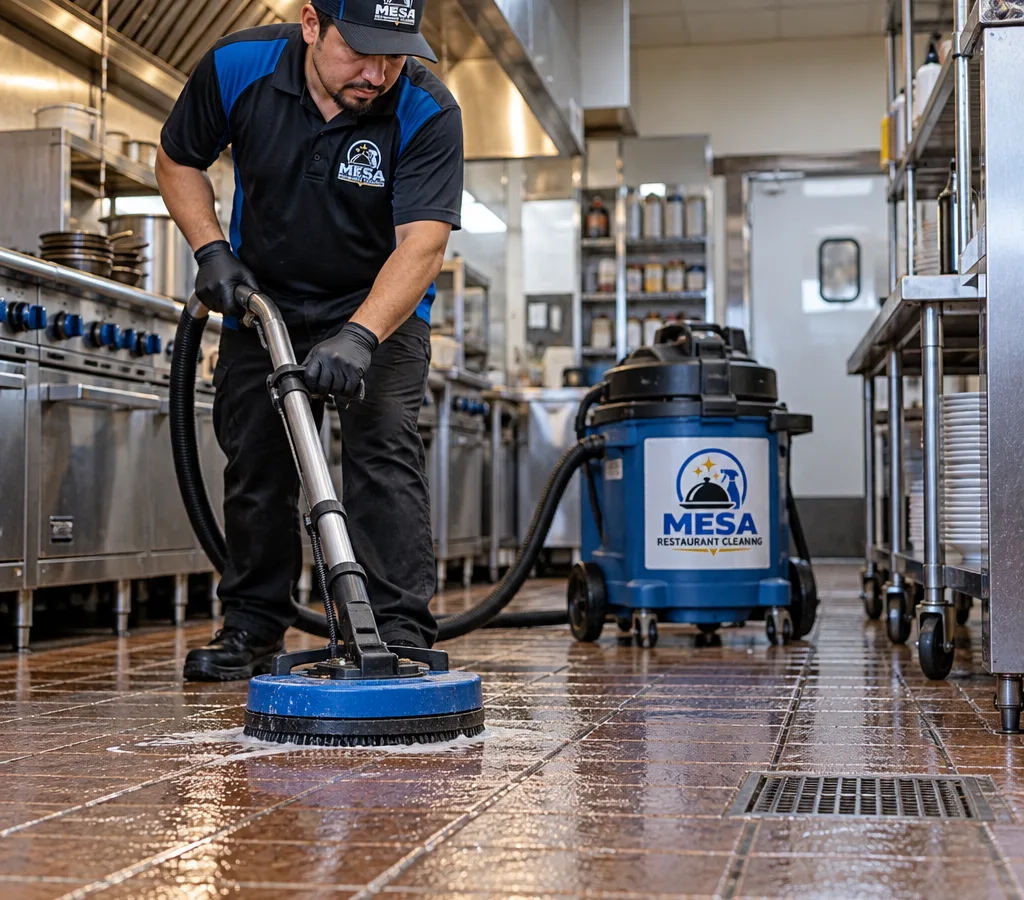
Mesa kitchens take constant abuse: fryer grease mist, spilled sauces, tracked-in dirt from the lot, and the daily rush of staff moving fast. Standard mopping can spread oils around, darken grout, and leave a residue that still feels slick. Our Restaurant Floor Cleaning Services focus on removing the buildup that causes odors, staining, and slippery spots.
Mesa Restaurant Cleaning works out of 325 S Westwood St, Suite 4 in Mesa, so we are used to the pace and scheduling needs of local operators. We plan service around your prep and close so you can keep your line moving.
What we clean—and what we do not hide behind vague language:
If you are coordinating multiple cleaning needs, a broader restaurant cleaning in Mesa plan can keep kitchens, dining areas, and restrooms on a consistent schedule.
Controlled cleaning from grout to drains
Tile is durable, but grout is porous and collects oils and fine soils. In a commercial kitchen, that combination turns grout lines dark fast and makes the floor harder to keep sanitary between deep cleans. Our approach to restaurant tile cleaning is built around controlled chemistry and thorough extraction.
Here is what you can expect:
This is commercial kitchen floor cleaning, not a cosmetic wipe-down. The goal is a floor that cleans easier during the week and stays more consistent between deep services.
Practical floor-care standards
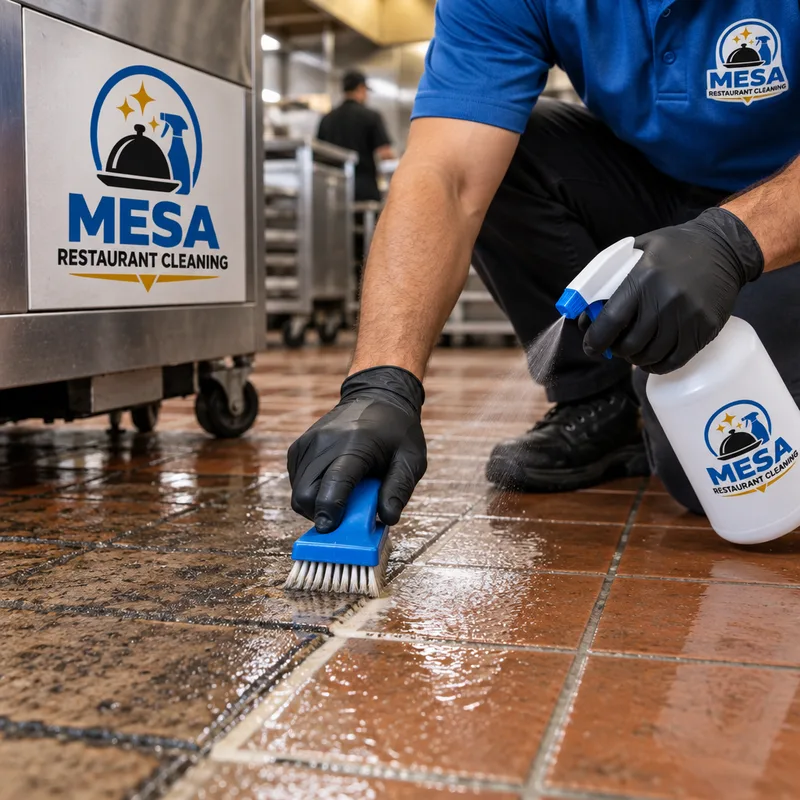
Fryer and grill zones, dish areas, and staff walk paths build up oil film that mops struggle to remove. We treat those high-load areas as their own zones so the whole floor is not left uneven.
Slippery floors often come from invisible residue, not just standing water. Proper rinse and recovery removes the film that makes surfaces feel slick after cleaning.
Restaurant grout cleaning should lift embedded soils while protecting the integrity of the grout joint. We adjust chemistry and agitation to the floor type and condition.
Restaurants do not have downtime in the middle of the day. We schedule around your close or slow windows and set expectations for dry time and access.
You get a written scope that names the areas cleaned, the process used, and any observed floor issues—like failing grout or missing seal—so decisions are straightforward.
The difference is full removal
Kitchen floor degreasing is different from general commercial floor cleaning. Grease is sticky, it spreads, and it bonds to textured surfaces. The fix is not stronger perfume; it is controlled dwell time, agitation, and full removal.
We typically handle restaurant floor degreasing in phases:
Mesa’s heat does not make grease disappear, but it can bake residues into textured surfaces over time, especially around equipment that runs hot. Regular deep cleaning keeps that from turning into a permanent-looking dark film.
Request a CallbackFrom walkthrough to upkeep plan
We confirm the areas, floor type, soil level, and access. You get a scope that spells out what will be cleaned, what needs to be moved, and how we will protect nearby equipment and walls.
We set wet-floor controls, protect vulnerable edges, and stage tools so the team is not tracking soils through cleaned zones. If you have floor drains, we work with the direction of flow.
We pre-treat heavy soils, mechanically scrub, then rinse and recover with wet extraction so residue is removed rather than diluted and left behind.
Corners, thresholds, under-lip areas, and grout lines get a final pass. We check for remaining slick spots, missed edges, or areas that may require follow-up because of long-term buildup.
We share practical upkeep guidance for your crew: what to use, what to avoid, and what to watch for so you keep traction and appearance longer between deep services.
Planning your floor service
Restaurant floor cleaning in Mesa typically ranges from about $250 to $900+ per visit, depending on square footage, floor type—tile and grout versus sealed concrete—and how much degreasing is needed around equipment lines. Small back-of-house floors with moderate soil land on the lower end, while larger kitchens with heavy grease buildup, detail edging, and grout restoration work price higher.
The final cost changes most with access, condition, and whether you want a one-time deep clean or an ongoing maintenance schedule. Exact pricing is confirmed after an on-site walkthrough and written scope.
“We had dark grout lines and that greasy haze that never went away. After the deep clean, the floor felt safer underfoot and our nightly cleanup stopped being a losing battle.”
“They worked around our close, focused on the fryer line and dish area, and actually removed the buildup instead of leaving it smeared around. The difference showed up the next morning.”
Clear answers before service
Most back-of-house floor cleanings take 1 to 3 hours, depending on square footage, grease load, and how much detail work is needed along edges and grout lines. Kitchens with heavy buildup around fryer lines or textured safety floors can take longer because they require extra dwell time, scrubbing, and thorough rinse-and-recovery.
Right after cleaning, the floor will be wet and should be treated as a slip hazard until dry, but proper degreasing is meant to reduce slippery residue once dry. The key is full rinse and extraction; leaving cleaner or emulsified grease behind can create a slick feel, which is why recovery is part of the process rather than optional.
We can clean around most fixed equipment and focus on open walk paths, the dish area, and line fronts, but the best results come from access to the worst buildup zones. During the walkthrough, we identify what can be safely moved by your staff and what should stay in place, then write the scope around that reality.
Yes, restaurant tile cleaning can include dining areas, bars, and entry corridors as long as the surfaces are tile or similar hard flooring. Dining areas often have different soils than kitchens, such as tracked-in dirt and beverage spills, so we adjust the cleaner and agitation method to match the soil type and protect the finish.
For most commercial kitchens, grout cleaning is typically needed every 1 to 3 months, but the right interval depends on volume, fryer usage, and how effective daily degreasing is. If grout lines darken again within weeks, it usually points to a heavy grease source, residue left by mop chemicals, or a floor texture that traps oils and needs a more frequent deep cycle.
Plan to remove loose items such as mats, trash cans, and small racks, sweep up dry debris, and confirm access to any areas you want prioritized like fryer lines or the dish pit. If you can stage the kitchen so the floor is open when we arrive, we spend more time cleaning and less time working around obstacles.
Talk with a local specialist
Tell us about your restaurant, schedule, and problem areas. We will help you build a practical cleaning scope for your Mesa-area location.
Request a quote
After you submit the form, our team will review your needs and follow up to discuss the location, scope, and scheduling.